Ground-breaking robotic lung cancer surgery performed at NHS Golden Jubilee with life support system
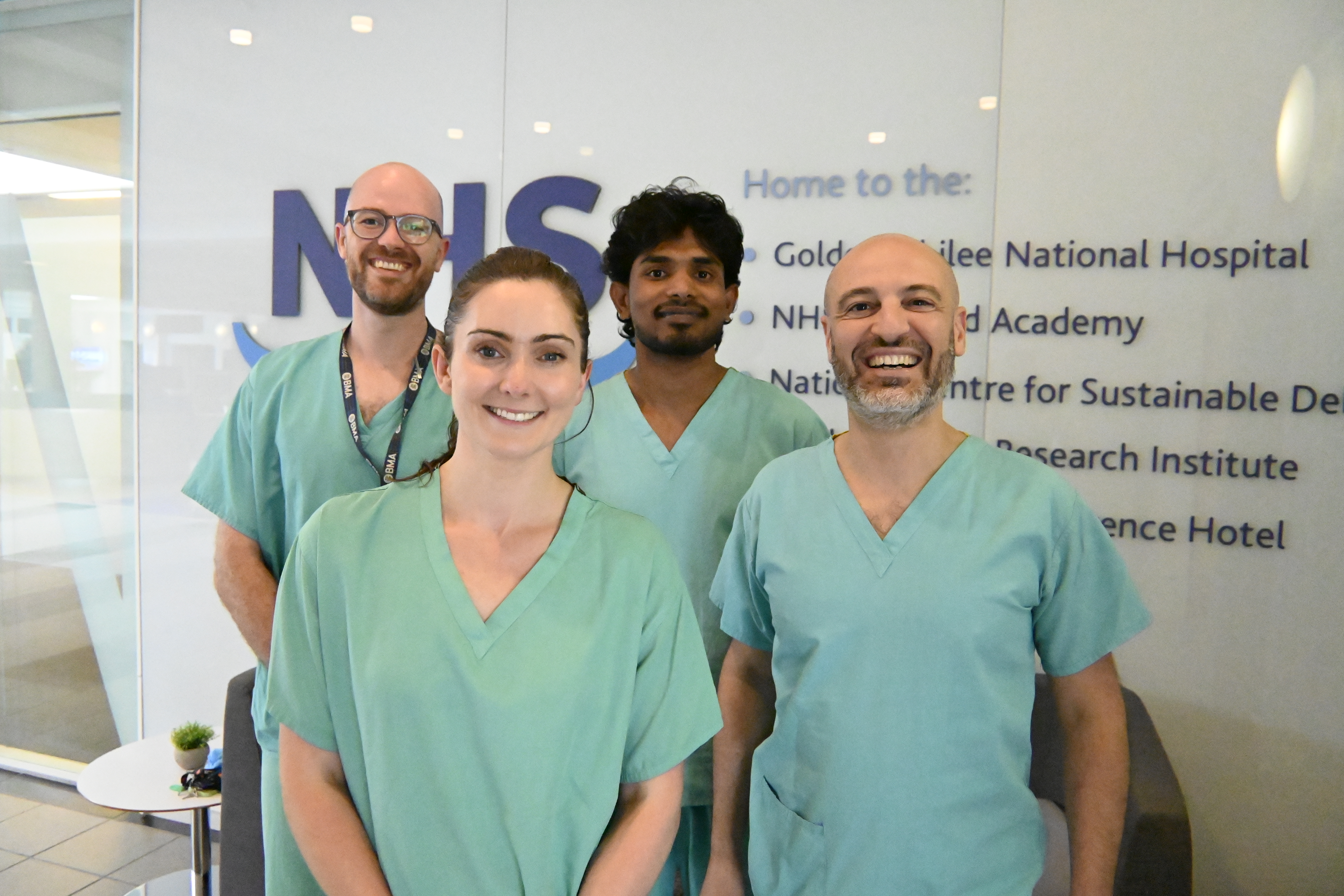
NHS Golden Jubilee has successfully carried out highly complex robotic lung surgeries using extracorporeal membrane oxygenation (ECMO), allowing patients to benefit from minimally invasive surgery for procedures that would normally require major open operations.
The ground-breaking procedures involved using veno-venous ECMO, a technique that temporarily oxygenates a patient’s blood outside the body, allowing surgeons to safely switch off the lungs during surgery. This enabled surgeons to operate on the airway itself, something that is not possible using standard ventilation techniques.
The two cases, performed within a six-month period, involved patients with tumours affecting the main airway. One patient required a complex carinal pneumonectomy for lung cancer, in which the lung and part of the airway junction were removed and reconstructed. The second patient, who had a carcinoid tumour, underwent airway reconstruction that preserved her lung, avoiding a full pneumonectomy.
Both procedures were carried out robotically, using keyhole surgery rather than traditional open chest surgery. As a result, both patients recovered more quickly than would normally be expected, returning home within days and experiencing significantly less postoperative pain.
Thomas Joyce, one of the patients who underwent the procedure at NHS Golden Jubilee, said: “From my first appointment through to my recovery, I felt I was in safe hands, and communication from the hospital and the surgeon helped with this. The care and support I received from the team at NHS Golden Jubilee was exceptional.
“After my procedure, I was amazed by how quickly I was up and moving again. Even though it was a major and complex procedure, I was walking after only 2 days, and being able to return home within a few days, sooner than expected, made a real difference to my recovery.
“I can’t thank the team at NHS Golden Jubilee enough for their dedication and hard work in caring for me.”
The use of ECMO allowed surgeons to keep both lungs temporarily non-functional while the airway was reconstructed, something that would usually require an open operation with cross-field ventilation. By combining robotic surgery with ECMO, the team avoided the need for a large incision while maintaining patient safety.
The procedures were led by Consultant Thoracic Surgeons Jennifer Whiteley and Rocco Bilancia, supported by a large multidisciplinary team of anaesthetists, perfusionists, nurses and Scotland’s national ECMO specialists. The collaboration brought together expertise in robotic surgery and ECMO, a combination rarely used in thoracic surgery worldwide.
The innovative technique was presented at the American Association for Thoracic Surgery conference in May 2026 and is the first published example of a robotic carinal pneumonectomy performed using ECMO.
Speaking about the achievement, Jennifer Whiteley said: “Performing these operations robotically with ECMO support represents a significant step forward in thoracic surgery.
“It enabled us to safely undertake some of the most complex airway procedures through keyhole surgery, something that would traditionally require a large incision.
“This achievement reflects the expertise of the entire multidisciplinary team and NHS Golden Jubilee's commitment to advancing patient care through innovation."
NHS Golden Jubilee is Scotland’s largest thoracic surgery centre and one of the largest in the UK. The team believes that using ECMO-assisted robotic surgery may allow more patients in the future to benefit from minimally invasive approaches to complex airway surgery.